
By Enock Sithole
A groundbreaking multi-country study has revealed how coordinated disinformation campaigns exploited social and political fault lines during recent elections in South Africa, Kenya, Nigeria and Senegal, and how even highly media-literate university students remain vulnerable to fake content.
The study, which was conducted by Africa Check with support from the Heinrich-Böll Foundation, provides one of the most detailed comparative analyses of election-related fake content circulated on social media platforms across the four diverse democracies.
Researchers collected and analysed hundreds of items of fake content — defined as fabricated social media posts, images, videos or audio making demonstrably false claims — circulating during recent election periods in each country. Alongside this, the team held in-depth focus groups with cohorts of media studies students to assess their perceptions, attitudes and behaviours regarding disinformation.
The analysis shows that disinformation did not appear randomly, it drew on “pre-existing fault lines” in each society to sow distrust, polarise public opinion and skew perceptions of political legitimacy.
In all four countries, fake content repeatedly tested vulnerability points such as distrust in electoral processes, ethnic or religious tensions and narratives stressing corruption or institutional failure. These “faultlines,” the report notes, were not universal but deeply shaped by each country’s political and social realities.
For example:
- In South Africa, a significant share of content aimed to undermine confidence in electoral integrity and the fairness of the process.
- In Kenya and Nigeria, disinformation most heavily exploited religious and ethnic divisions historically associated with election-period violence or tension.
- In Senegal, electoral fake content tended to lean on perceptions about poll results and support for high-profile candidates.
The researchers noted that such targeted falsehoods can “fuel an environment of uncertainty, suspicion and public alarm” that imperils democratic stability at moments when citizens most need reliable information to make electoral decisions.
Student responses: literacy helps, but isn’t enough
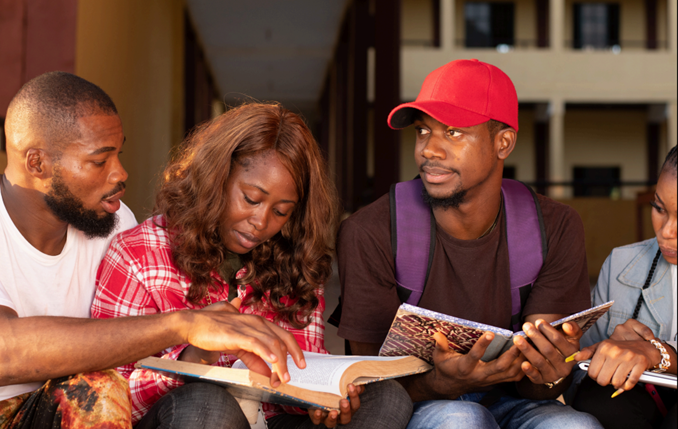
A unique dimension of the study was its focus on media studies students, a group presumed to have higher levels of media literacy than the general population.
Across the four countries, students demonstrated better than average care in checking information before sharing it on social media. They read beyond headlines more often and were likelier than wider populations to question the authenticity of suspicious posts.
However, the research found that media literacy alone did not immunise students against believing or spreading fake content. Some forms of disinformation were still shared if they appeared emotionally compelling . For instance, if they touched on the safety of loved ones, or if social pressure from peers influenced sharing behaviour.
Other notable findings included differences by gender and country:
- Male students generally reported feeling more confident online and were more likely to engage publicly with political content, but they also displayed higher vulnerability to believing fake content and conspiratorial narratives.
- Female students, while more cautious online, expressed greater disillusionment and distrust toward political institutions and the electoral process.
- Variations across countries suggested that political context — such as trust in electoral bodies — might correlate with how susceptible students feel to misinformation. Senegalese students, for example, appeared marginally less vulnerable to disinformation, possibly linked to comparatively higher satisfaction with democratic processes.
The report also dissects how fake content was made to look authentic. Tactics included the use of misappropriated videos and images, poll results presented as fact and impersonation of trusted media or institutional brands. In Kenya, for example, many false claims employed official logos to give them the appearance of legitimacy.
Researchers argue that such strategies pose serious challenges for election integrity, particularly on platforms where speed and virality often outpace factchecking and moderation efforts.
The study’s authors stress that boosting media and information literacy, while useful, is not a “silver bullet” against misinformation. They highlight the need for policies that account for local contexts rather than one-size-fits-all solutions and calls for strengthening trust in democratic institutions as a long-term defence against misinformation’s corrosive effects.
“Disinformation operates in local contexts,” the report concludes, “and efforts to counter it must be rooted in understanding the socio-political dynamics that make different fault lines susceptible to exploitation.”
As African countries prepare for more elections in the coming years, the findings of Testing the Faultlines offer a sobering reminder: safeguarding democracy requires more than factchecking and media literacy, it demands systemic efforts that build resilience, trust and social cohesion in societies increasingly vulnerable to digitally amplified falsehoods.
This article was originally published in the Ajen Newsletter.